
L'APNÉE, UNE PLONGÉE INTÉRIEURE À TRAVERS LA MAÎTRISE DU SOUFFLE
Freediving is a practice that, like yoga, is based on breath control and the connection between body and mind. Suspended in the water, without breathing, you dive not only into the depths of the ocean but also into those of your being . It develops inner calm , improves lung capacity, and strengthens mental focus . By combining freediving and yoga, you explore a new dimension of well-being, where each breath is a guide to better self-knowledge . This post invites you to discover how freediving and yoga complement each other, and why this underwater discipline attracts more and more yogis and yoginis looking for a balance between inner calm and exploration of physical limits .
Written by Valentine
Collapsible content
Reading time
Environ 10 minutes
WHAT YOU ARE ABOUT TO DISCOVER
- L’apnée : Une pratique complémentaire au yoga
- Les bienfaits de l’apnée pour le corps et l’esprit
- Les différentes formes d’apnée : Statique, dynamique et leur influence sur le mental
- L’apnée et la méditation : Un lien profond entre calme intérieur et contrôle du souffle
- Comment l'apnée enrichit la pratique du pranayama
- Initiation à l’apnée pour les yogis et yoginis
- Un voyage intérieur : Explorer les limites du corps avec bienveillance
- L'apnée comme pratique mondiale en pleine expansion, alliant performance et bien-être
" Let's take a look " !

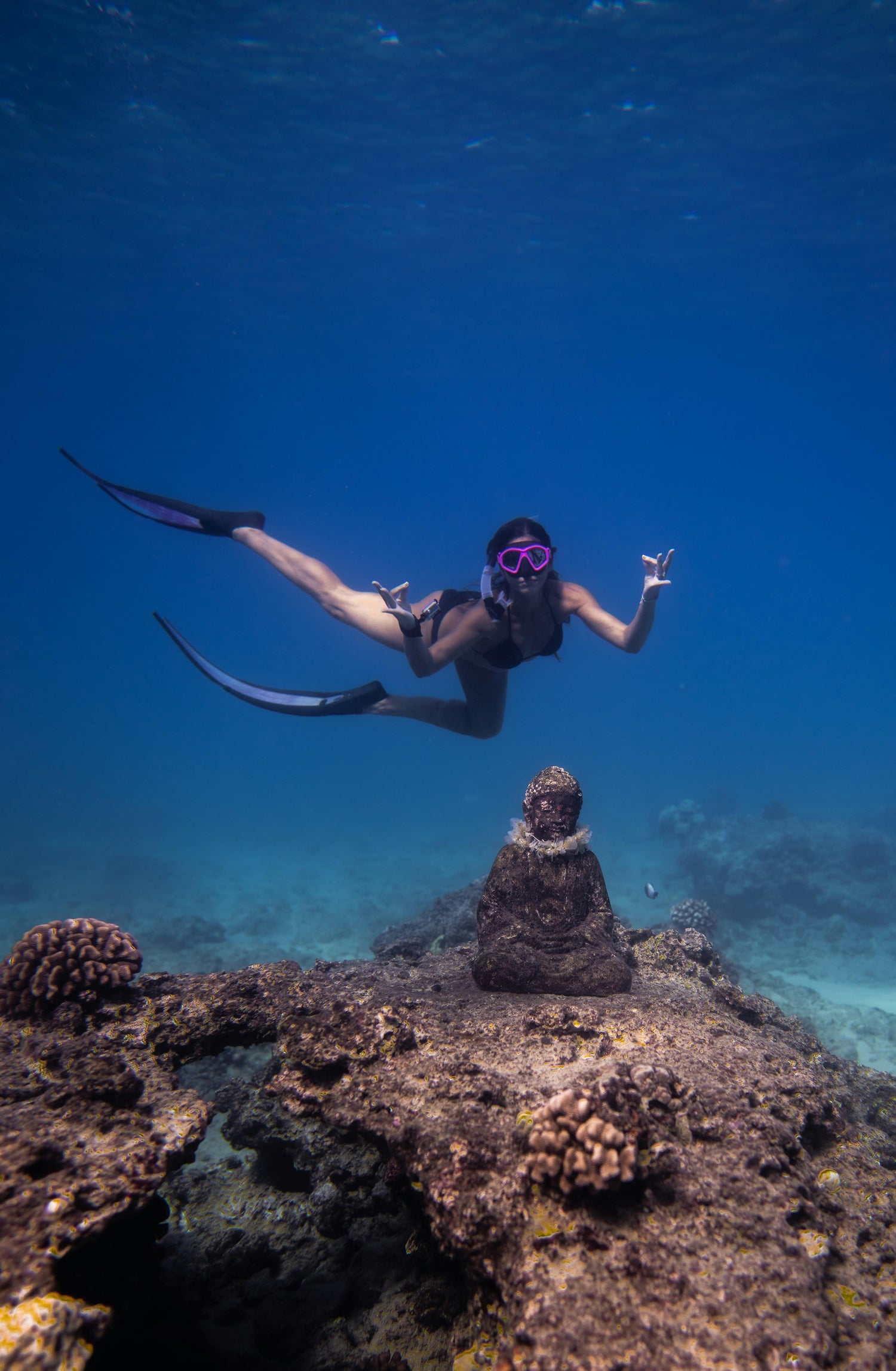
APNEA: A COMPLEMENTARY PRACTICE TO YOGA
Freediving, although practiced in water, shares a common essence with yoga: the mastery of breath and the deep connection between body and mind. Whether you are lying on your yoga mat or immersed in water, both practices require slowing down , refocusing, and calming the mind. In freediving, this relationship with breath takes on an even more pronounced dimension, as the practitioner must deal with the absence of air , a state that requires complete trust in one's body and total mastery of one's mind.
Imagine yourself gently diving underwater , feeling the coolness enveloping your body. In that moment, everything slows down: your heart rate decreases, your muscles relax, and your mind empties of everyday concerns. Underwater, silence is total , every movement becomes fluid and measured. You are completely absorbed in the present moment, just like during a deep meditation or pranayama session. Freediving forces you to be here and now, to listen to your body's signals and find calm in a situation that might naturally induce stress.
Let's take the example of a static apnea practitioner, lying quietly on the surface of the water. He holds his breath, but far from being an agonizing experience, it is an invitation to reconnect with himself . By observing his heartbeat slow down, he feels that sensation of fullness and letting go that many yogis seek in their postures or in meditation. Freediving then becomes a natural extension of his yoga practice, a way to further deepen his mastery of his breath and his mind.
Underwater, the perception of time changes , just as in long-held yoga postures. You learn to accept discomfort, move beyond primal fears, and find a state of inner peace . These are skills that yogis cultivate on the mat as well. By combining yoga and freediving, you enter a new dimension of mindfulness , where every breath counts, where every second underwater is a meditation in itself.
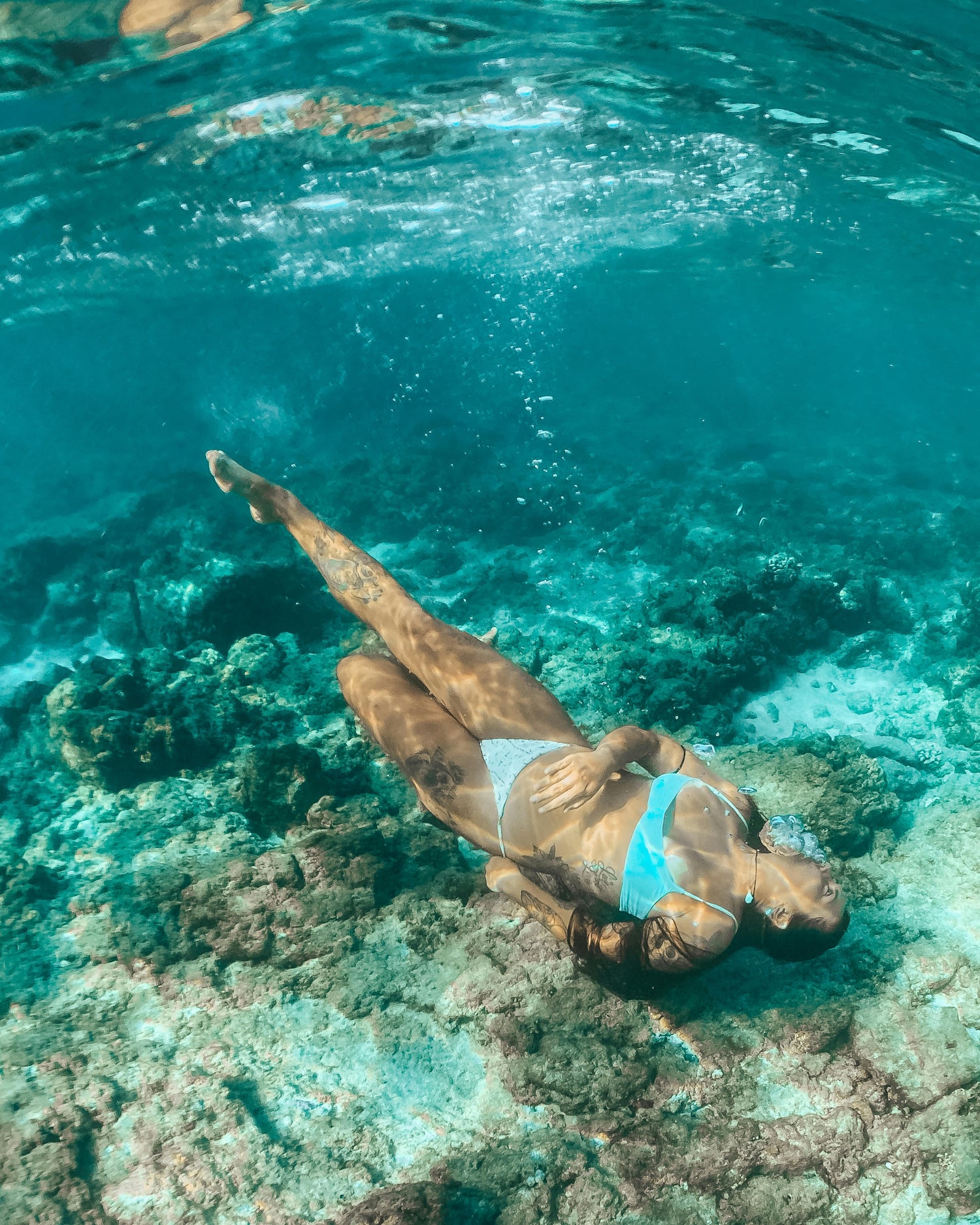
THE BENEFITS OF FREEDIVING FOR BODY AND MIND
Freediving, much more than just a physical exercise, provides profound benefits for the body and mind. On a physical level, it develops increased lung capacity . By holding your breath underwater, your lungs expand to their maximum, thus improving the elasticity of the diaphragm . For example, a regular freediver can double or even triple the length of time they can hold their breath. This breath control helps strengthen the respiratory muscles , while allowing for better oxygenation of the body during moments of recovery on the surface. Imagine returning to the surface after a dive, each breath becoming a burst of fresh air revitalizing your cells.
Additionally, freediving naturally alters your heart rate . When you're underwater, your heart instinctively slows down thanks to the immersion reflex , a natural mechanism that helps conserve oxygen for vital organs. This induces a state of deep calm , comparable to meditation. Think of that moment when, suspended in the water, you feel your entire body relax, your muscles loosen, and your thoughts calm.
On a mental level, freediving offers a unique opportunity for active meditation . The absence of air and the silence underwater force the practitioner to focus entirely on the present moment . Everyday distractions disappear and only the rhythm of your heart and the gentle pressure of the water remain. For example, during static freediving, where you float motionless on the surface of the water, the mind enters a phase of full awareness , free from the constraints of the outside world. This allows you to calm your thoughts and manage stress in a more conscious and thoughtful way.
Finally, freediving cultivates exceptional mental resilience . Each dive puts you face to face with your physical limits , but also your mental ones. For example, managing the urge to breathe, which can be perceived as an emergency, becomes an exercise in emotional control . By learning to remain calm underwater, even when the body is begging for air, you develop greater self-confidence . This self-control, combined with a deep connection with your body, makes freediving a powerful way to harmonize mind and body .
Freediving, whether practiced dynamically (moving underwater) or statically, thus becomes a transformative experience . Each immersion is an opportunity to reconnect with one's breath, body and mind, while exploring the depths of the inner ocean .
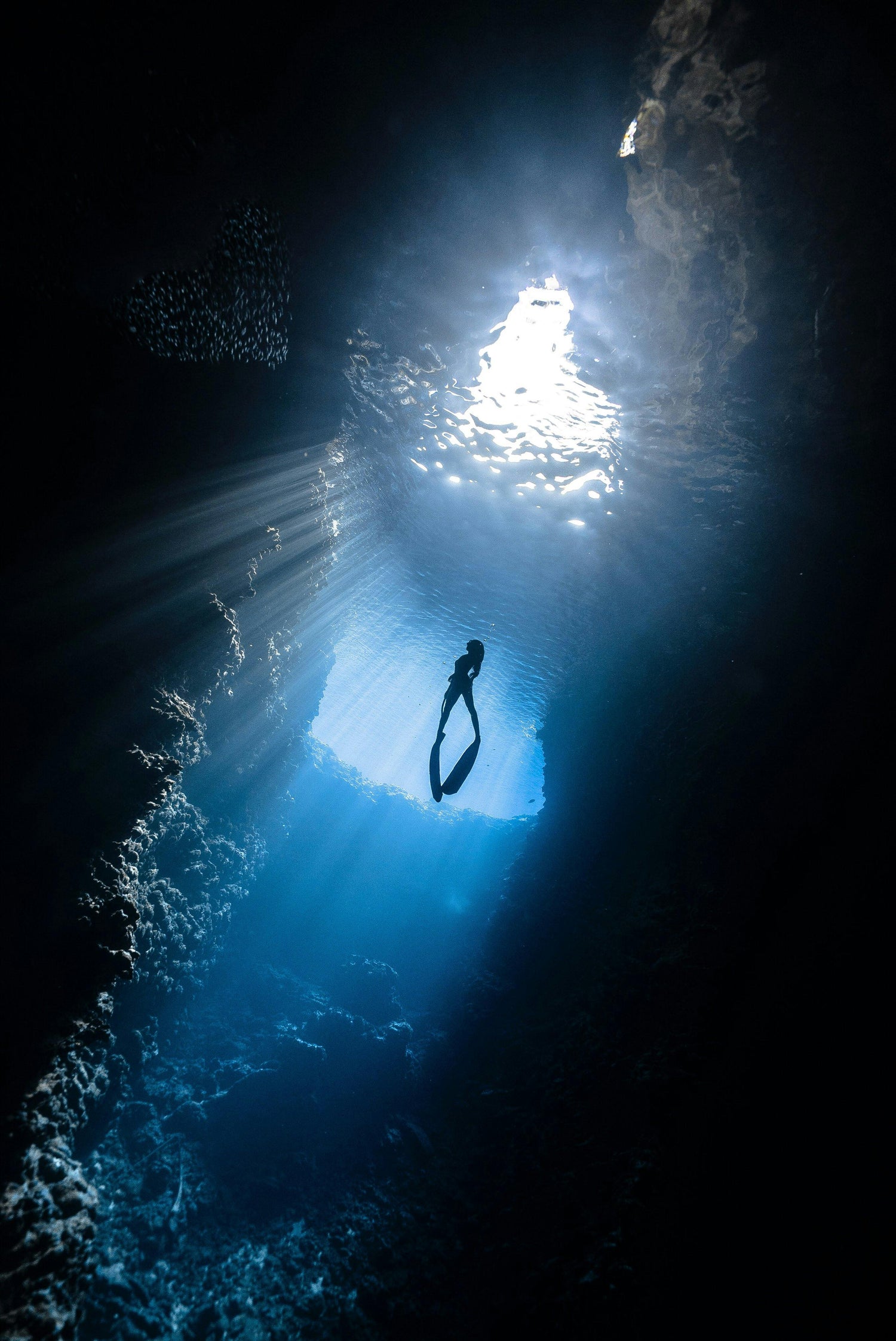
LES DIFFÉRENTES FORMES D'APNÉE : STATIQUE, DYNAMIQUE ET LEUR INFLUENCE SUR LE MENTAL
L’apnée se décline en plusieurs formes, chacune apportant des bienfaits spécifiques tant pour le corps que pour l’esprit. Les deux principales pratiques sont l’apnée statique et l’apnée dynamique, et bien qu’elles diffèrent par leur approche, elles partagent toutes deux un impact profond sur le mental et la maîtrise de soi.
Dans l’apnée statique, le pratiquant reste immobile, flottant à la surface de l'eau ou juste sous la surface. Le but ici n’est pas de parcourir une distance mais de tenir le souffle le plus longtemps possible tout en maintenant un état de calme intérieur. Imaginez-vous allongé, flottant doucement sur l’eau, les yeux fermés, tandis que tout autour de vous est silencieux. Cette pratique exige une concentration intense, car l'absence d’action physique signifie que votre esprit devient l’unique focus. Vous êtes obligé de faire face à vos pensées, à l’envie de respirer qui se fait progressivement sentir. L’apnée statique est une invitation à l'introspection, à l’acceptation du moment présent, et à la gestion du stress dans des conditions qui pourraient sembler inconfortables. Mentalement, elle renforce la patience, le lâcher-prise, et la capacité à rester calme sous pression.
D’un autre côté, l’apnée dynamique implique un mouvement sous l’eau, que ce soit en nageant à l’horizontale dans une piscine ou en explorant les profondeurs de la mer. Cette forme d’apnée requiert non seulement une maîtrise du souffle, mais aussi une endurance physique et une coordination de chaque mouvement pour minimiser la consommation d’oxygène. Par exemple, dans une session d’apnée dynamique en mer, vous pourriez glisser lentement entre les récifs, chaque coup de palme mesuré pour maximiser l’efficacité. Ici, le mental doit rester concentré sur la fluidité des mouvements et la gestion de l’énergie. L’apnée dynamique vous pousse à être en symbiose avec votre environnement, à anticiper vos limites et à adapter vos actions en conséquence. Cela demande un fort sens de l’adaptation et une capacité à maîtriser les peurs qui peuvent surgir, notamment face à l’immensité de l'océan ou à la sensation de confinement sous l'eau.
Ces deux formes d’apnée ont un impact direct sur le mental. Que vous pratiquiez l’apnée statique ou dynamique, vous apprendrez à mieux gérer le stress, à améliorer votre concentration, et à développer une meilleure compréhension de vos réactions émotionnelles dans des situations où le contrôle est crucial. Par exemple, lors d'une apnée dynamique en profondeur, le moment où vous vous retournez pour remonter à la surface exige une clarité mentale absolue. Vous devez évaluer votre capacité à atteindre la surface sans paniquer, en maintenant un rythme de retour constant et en gardant l’esprit calme.
Que ce soit l’apnée statique ou dynamique, ces deux pratiques offrent des leçons de résilience et aident à repousser les limites physiques tout en explorant la force mentale qui réside en chacun de nous. Ces formes d’apnée deviennent ainsi des exercices mentaux autant que physiques, où chaque instant sous l’eau est une opportunité de transcender les peurs et de renforcer la pleine conscience.
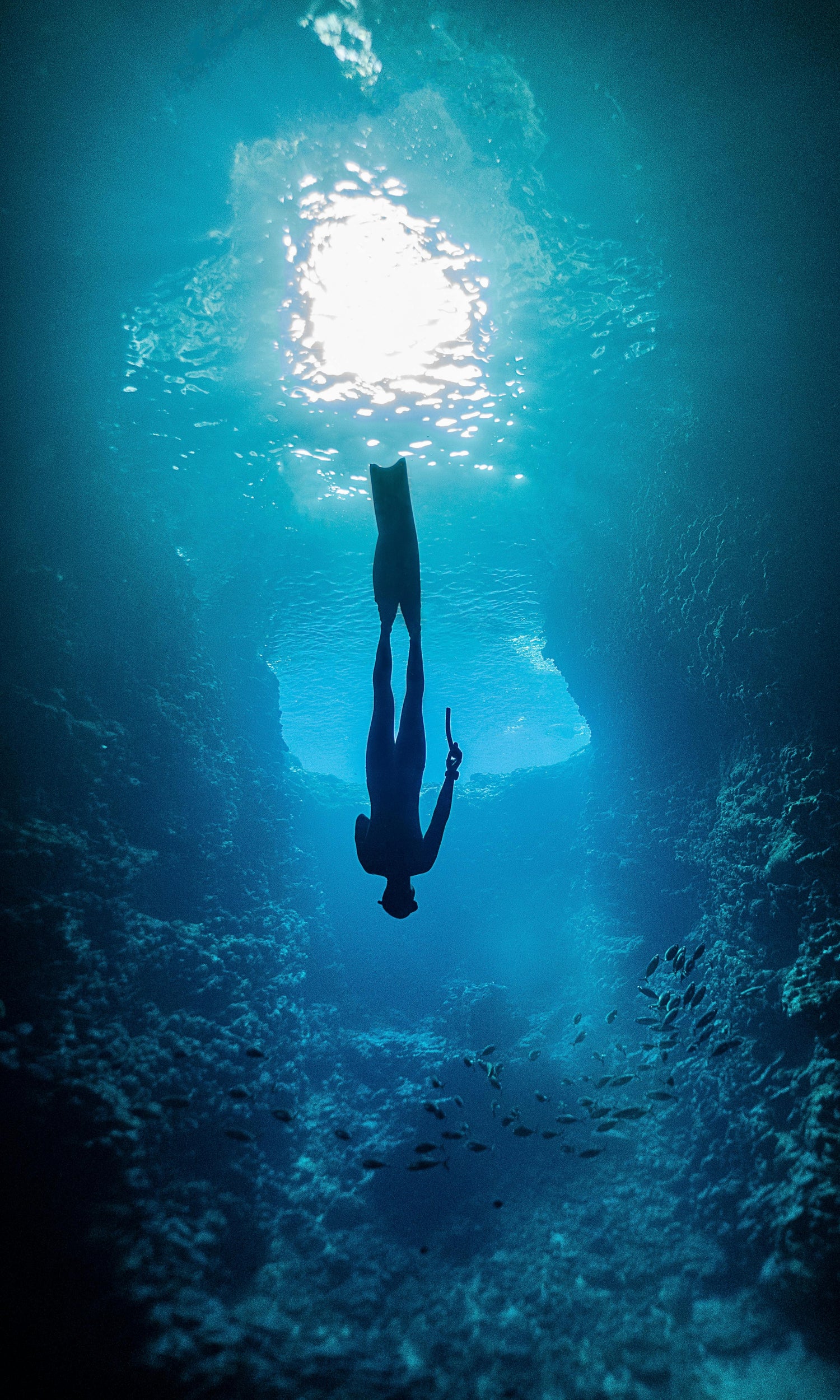
L'APNÉE ET LA MÉDITATION : UN LIEN PROFOND ENTRE CALME INTÉRIEUR ET CONTRÔLE DU SOUFFLE
L’apnée et la méditation, bien que pratiquées dans des contextes différents, partagent une profonde connexion. Les deux disciplines invitent à une exploration intérieure, à un calme profond et à une maîtrise fine du souffle. Que vous soyez assis en méditation sur un tapis ou immergé sous l’eau, le but reste le même : calmer le mental et contrôler la respiration pour atteindre un état de pleine conscience.
Dans la pratique de l’apnée, le contrôle du souffle est essentiel. À chaque immersion, le pratiquant doit se concentrer sur sa respiration avant de plonger, ralentir son rythme cardiaque et se préparer à retenir son souffle pendant de longues minutes. Cette préparation mentale est similaire à celle que l'on retrouve en méditation, où l’on se centre sur chaque respiration pour apaiser les pensées et se recentrer sur l’instant présent. Sous l’eau, ce contrôle devient encore plus vital : la moindre précipitation, la moindre tension peut conduire à l'épuisement rapide de l'oxygène disponible. Ainsi, l’apnée force à une introspection et une concentration que l’on retrouve dans les états méditatifs.
Prenons l’exemple d’un apnéiste qui, avant chaque plongée, s’installe sur le bord de l’eau pour une session de respiration profonde. Il inspire lentement, expire tout aussi doucement, ses pensées se dissipent. Lorsqu'il entre dans l’eau, son mental est déjà apaisé, ses préoccupations mises de côté, exactement comme lors d'une séance de méditation guidée. Chaque mouvement sous l’eau devient une extension de cette tranquillité intérieure. Le silence environnant, l'absence de tout bruit extérieur, amplifie cette sensation de calme absolu, une qualité que les pratiquants de yoga et de méditation recherchent également dans leurs pratiques.
D’un point de vue physiologique, l’apnée et la méditation partagent des effets similaires sur le corps. Les deux pratiques réduisent le rythme cardiaque, apaisent le système nerveux et aident à réduire les niveaux de stress. Par exemple, lorsqu’un apnéiste reste immobile sous l’eau en apnée statique, son corps entre en mode de relaxation profonde, une sensation comparable à l’état de bien-être que l’on ressent après une longue méditation. Ce ralentissement du métabolisme permet de prolonger la durée de rétention du souffle, tout en maintenant une connexion intime avec chaque sensation du corps.
En ce sens, l’apnée est une forme de méditation active, où la maîtrise du souffle joue un rôle central. Sous l’eau, vous êtes forcé de rester dans l’instant, car le moindre moment de distraction ou de panique peut briser cette fragile harmonie. Cette synergie entre apnée et méditation est évidente lorsque, sous l’eau, l'esprit et le corps fonctionnent en parfaite synchronisation. Les pensées s’évanouissent, il n’y a plus que le moment présent, le silence, et le contrôle du souffle.
Ainsi, que vous pratiquiez l'apnée pour améliorer vos capacités physiques ou comme un prolongement de votre pratique de la méditation, ces deux disciplines se nourrissent l'une de l'autre. En combinant les techniques de respiration et le lâcher-prise de la méditation avec la discipline de l’apnée, vous atteignez un équilibre mental et un calme intérieur qui vous permettent de repousser vos limites tout en restant en paix avec vous-même.
HOW APNEA ENRICHS THE PRACTICE OF PRANAYAMA
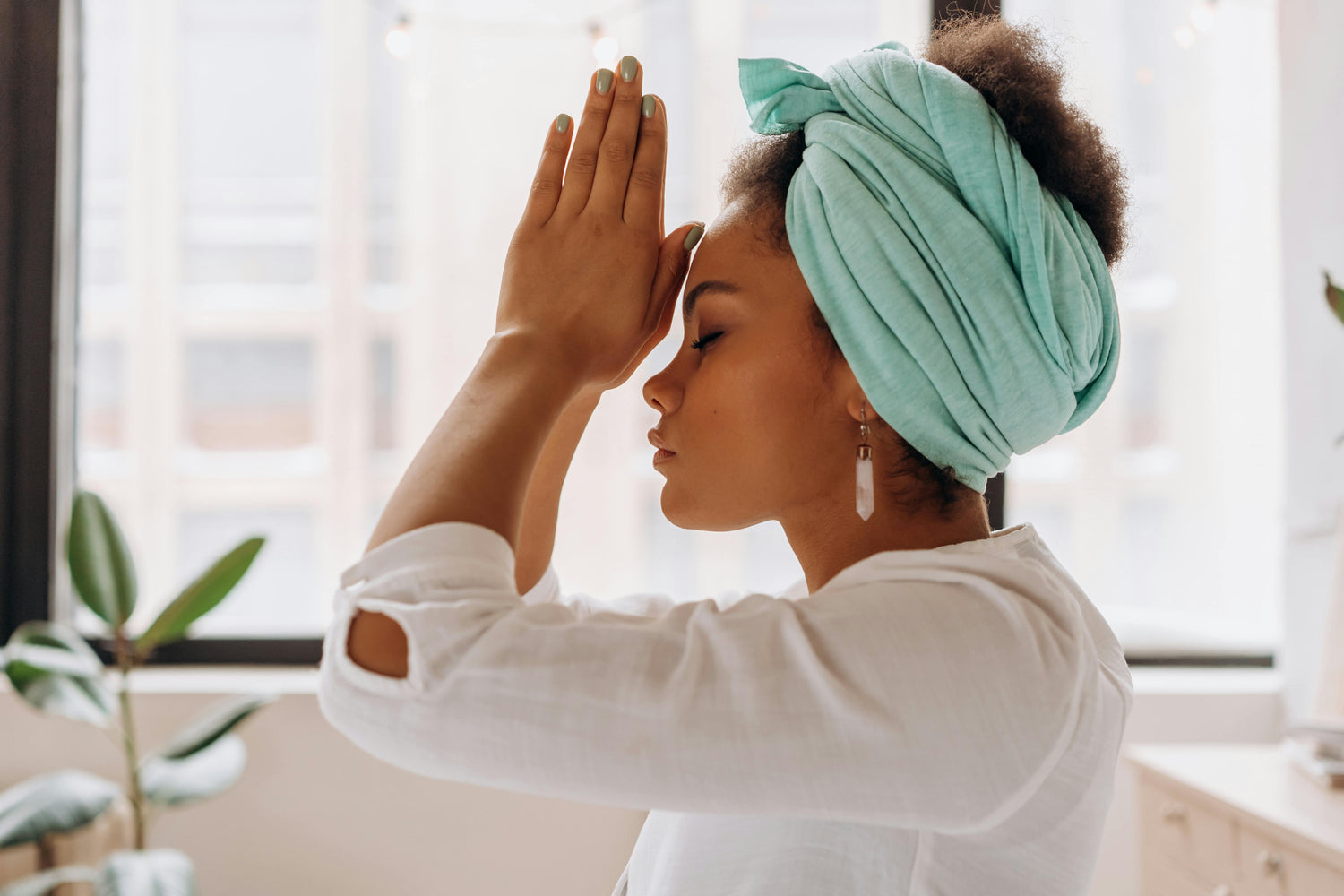
Freediving and pranayama are two disciplines closely linked by breath control . By practicing freediving, you deepen your ability to control and regulate vital energy, an essential aspect of pranayama. Freediving takes these techniques to the next level by adding a dimension of physical immersion and active oxygen management, which goes beyond the exercises performed on the mat.
In pranayama, the goal is to regulate the breath to harmonize energy, improve concentration, and achieve a state of inner calm . Freediving, through water pressure and immersion, amplifies this mastery. Imagine a freediver floating below the surface: the pressure accentuates thoracic expansion, making each breath more crucial. This deep awareness of breath enriches the practice of pranayama.
Breath retention (kumbhaka), a central element of pranayama, is directly applied in apnea. You learn to prolong this retention, to relax despite discomfort, which strengthens your mastery of pranayama. Regular practice of apnea makes you more aware of your breathing capacity , allowing for longer retention and better control on the mat.
Additionally, freediving requires an active reduction in oxygen consumption , a concept echoed in techniques such as Nadi Shodhana (alternate nostril breathing). Underwater, each breath must be calculated and precise, which refines your breathing in pranayama exercises, where the aim is also to make the breath subtle and efficient.
Finally, freediving develops an essential inner calm . In the underwater silence, the mind is forced to remain serene, even when the need to breathe becomes pressing. This calm carries over into advanced pranayama practices , such as Bhastrika , where great concentration is required.
In summary, freediving enriches pranayama by strengthening breath control , refining oxygen management, and developing deep mental calm . These two practices feed off each other, creating a stronger connection between body, mind, and breath , both on land and underwater.
INTRODUCTION TO FREEDIVING FOR YOGIS AND YOGINIS
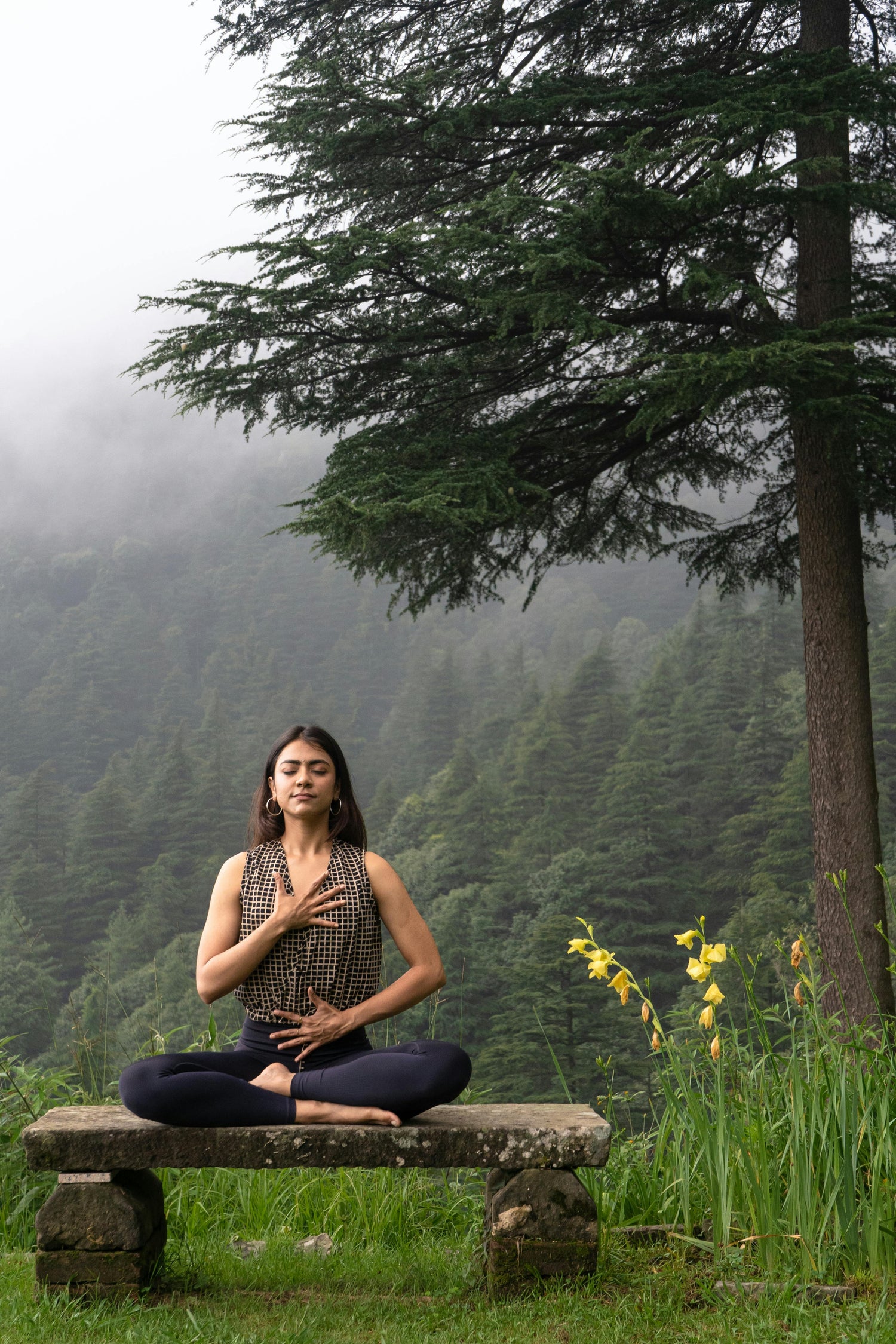
If you're a yoga practitioner and freediving intrigues you, it's important to start with a solid foundation, just like yoga. Freediving requires physical and mental preparation , and it's essential to progress smoothly to avoid unnecessary pressure. To begin, it's recommended to practice pranayama exercises before even getting into the water. Breathing techniques like Kapalabhati (Breath of Fire) or Nadi Shodhana (Alternate Nostril Breathing) help improve your lung capacity and develop conscious breath control .
When you're ready to practice freediving in the water, start with static apnea sessions, floating on the surface. Relax, let your body sink slightly into the water, and focus only on your breath. As in Shavasana or Child's Pose , learn to relax your body to stay calm. This first approach will teach you how to stay relaxed while holding your breath, an essential state for prolonging retention and fully enjoying the experience.
In dynamic apnea, where you swim while holding your breath, the goal is to minimize physical exertion while remaining in harmony with your breathing. It's similar to a fluid Vinyasa sequence, where each movement is coordinated with the breath to conserve energy. Don't try to go overboard at the beginning, but focus on the quality of your breathing and your ability to remain calm underwater.
Finally, as in yoga, freediving requires respecting your own limits . Be attentive to your body and your feelings. It is also important to practice in a safe environment , always accompanied or supervised. This discipline, like yoga, will help you develop a deeper connection with your breath, improve your concentration , and strengthen your mental resilience .
UN VOYAGE INTÉRIEUR POUR EXPLORER LES LIMITES DU CORPS AVEC BIENVEILLANCE
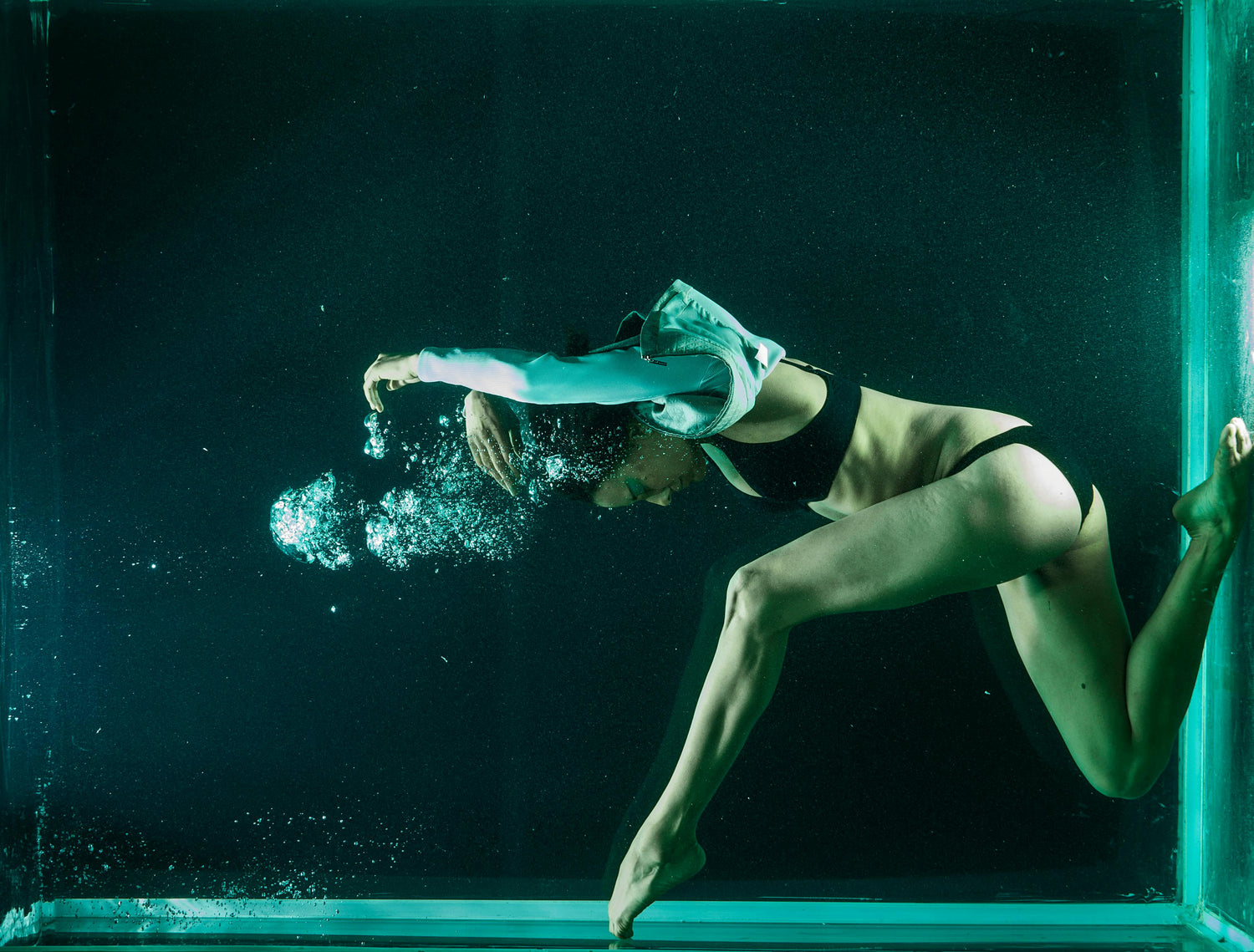
Freediving, much more than a simple physical discipline, is an invitation to a profound inner journey . Underwater, the breathlessness and silence force you to return to yourself, a unique introspection that allows you to encounter your limits with kindness. As in yoga, where each posture confronts you with your flexibility and strength, freediving pushes you to explore your mental resilience and your ability to remain calm in the face of discomfort.
Imagine yourself submerged underwater, everything is calm, your breath is held, and you have to trust your body to get through this experience without panic. This moment of breath retention, when the need to breathe is felt, is comparable to the moments when, in yoga, you hold a demanding posture. This is where apnea becomes a mirror: it reflects your fears, your doubts, but also your ability to stay centered and manage discomfort .
Underwater, you learn to listen to yourself, to observe your body's signals without judgment. Every second becomes an opportunity to push your limits , not through force, but through kindness and acceptance . In the same way as in yoga, where you never force a posture but seek to accompany it, freediving teaches you to respect your abilities while gradually pushing them.
This underwater journey is above all an exploration of yourself , a moment to reconnect with your inner energy and develop a relationship of trust with your body . In freediving, as in yoga, you learn to stay present , to savor each moment, even when you touch the limits of your comfort. This practice allows you to approach these limits not with tension, but with a benevolent serenity , knowing that each immersion is an opportunity to learn and grow.
L'APNÉE COMME PRATIQUE MONDIALE EN PLEINE EXPANSION, ALLIANT PERFORMANCE ET BIEN-ÊTRE
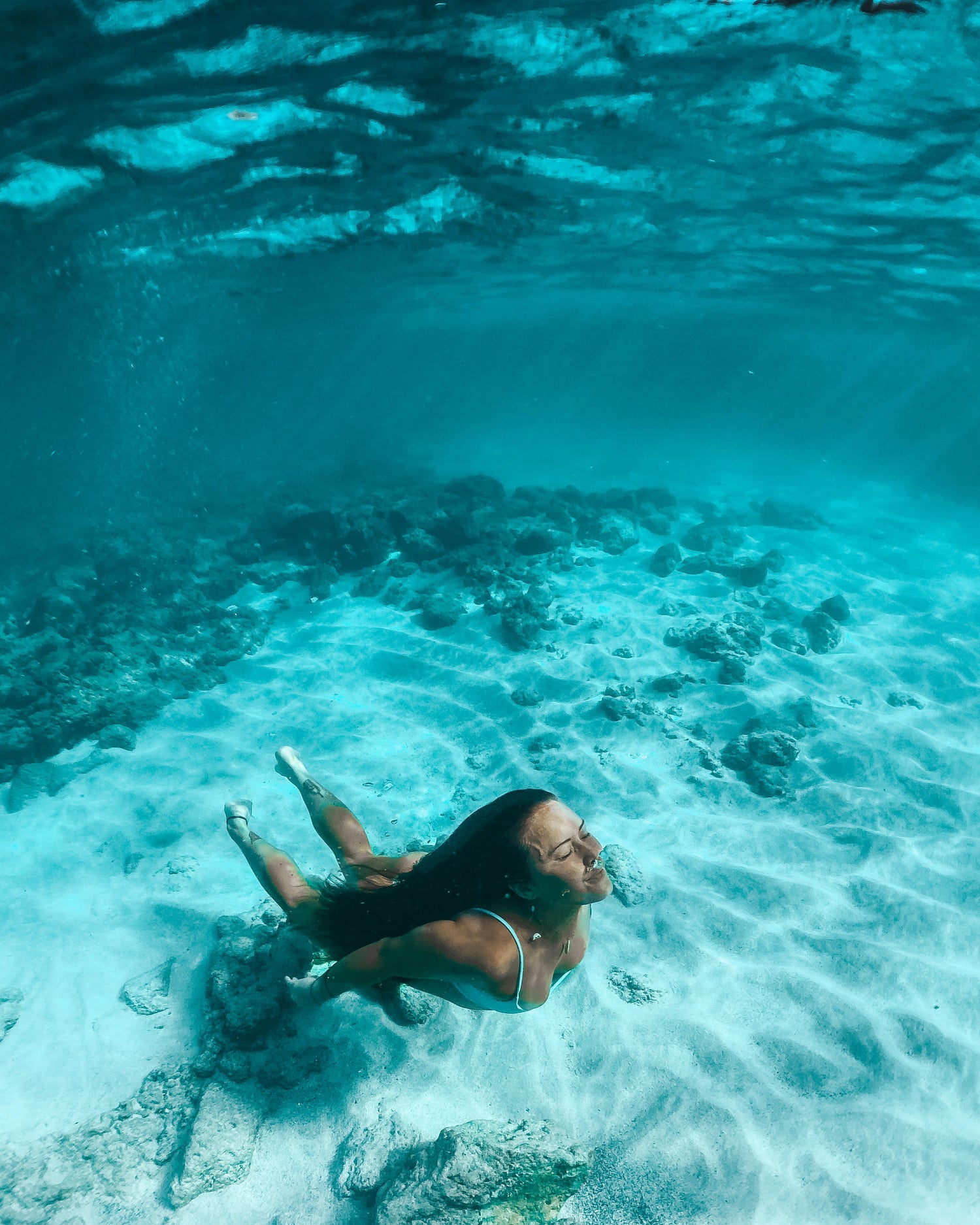
Over the years, freediving has become much more than just a sport or recreational discipline; it has established itself as a universal practice , practiced and appreciated throughout the world. What was once reserved for a handful of explorers of the depths has transformed into an international community , attracting both thrill-seekers and wellness enthusiasts. More and more people are discovering the benefits of this practice on self-control , stress management , and reconnecting with one's body .
Today, freediving competitions are held in iconic locations such as the Caribbean , the Mediterranean , and even in swimming pools in major global cities. World-renowned athletes, such as William Trubridge , Alexey Molchanov , and Alessia Zecchini , are constantly pushing human limits, reaching dizzying depths and breaking records in static apnea. But beyond the sporting achievements, freediving attracts a wide audience, from yogis to health professionals, who discover in it a practice of mindfulness .
Freediving has also become a recognized therapeutic tool, used to treat anxiety , chronic stress , and even certain respiratory pathologies. Freediving retreats are springing up in exotic destinations like Bali , Hawaii , or the Greek islands , where participants learn to master their breath while exploring underwater wonders. These events bring together thousands of enthusiasts, all attracted by the transformative potential of this practice. Freediving has thus become a true way of life , influencing wellness practices like yoga, meditation, and holistic therapies.
The sheer scale of freediving worldwide is a testament to its profound impact on self-realization , while also providing an ideal setting for reconnecting with nature . From prestigious competitions to spiritual retreats, freediving continues to captivate, uniting human beings in a collective quest for inner mastery and underwater freedom .
Valentine's Bio
-

VALENTINE
1994, Reunion Island, Mauritius, a Life carried by the Indian Ocean and Yoga
Since childhood, this intrepid traveler has traveled the globe, leaving her footprints on beaches around the world.Passionate about surfing, scuba diving and sailing, she has made the oceans her playground and source of inspiration.
The freedom of the waves, the serenity of the ocean depths and the wind in his sails have punctuated his journey, always guided by a quest for connection with nature.
It was through her explorations that yoga became more than a practice for her – it was a way of life.
Between early morning surf sessions and meditative sunsets, she found in yoga a perfect balance of strength, flow and self-awareness.
Today, she combines her passion for water sports with teaching yoga and is part of the Yogaterrae team, here in France, in the South West and often remotely :)
This adventurer is a true source of inspiration for anyone who aspires to live in harmony with their body and nature.
Through her stories of incredible experiences, she invites everyone to open up to a world where every wave, every breath and every posture is a celebration of life.
Plus d'articles de Valentine...
-
HATHA YOGA
DISCOVER THE ARTICLEExplorez l'harmonie du Hatha Yoga, là où chaque posture stabilise le corps et calme l'esprit dans toute sa splendeur.
-
VINYASA YOGA
DISCOVER THE ARTICLEPlongez dans le flow du Vinyasa, où chaque respiration guide un mouvement vers l'équilibre et l'énergie.
-

THE HISTORY OF THE CHAKRAS
DISCOVER THE ARTICLEExplorez les chakras, ces trésors mystiques millénaires, où chaque découverte vous révèle une sagesse ancienne et puissante !
